
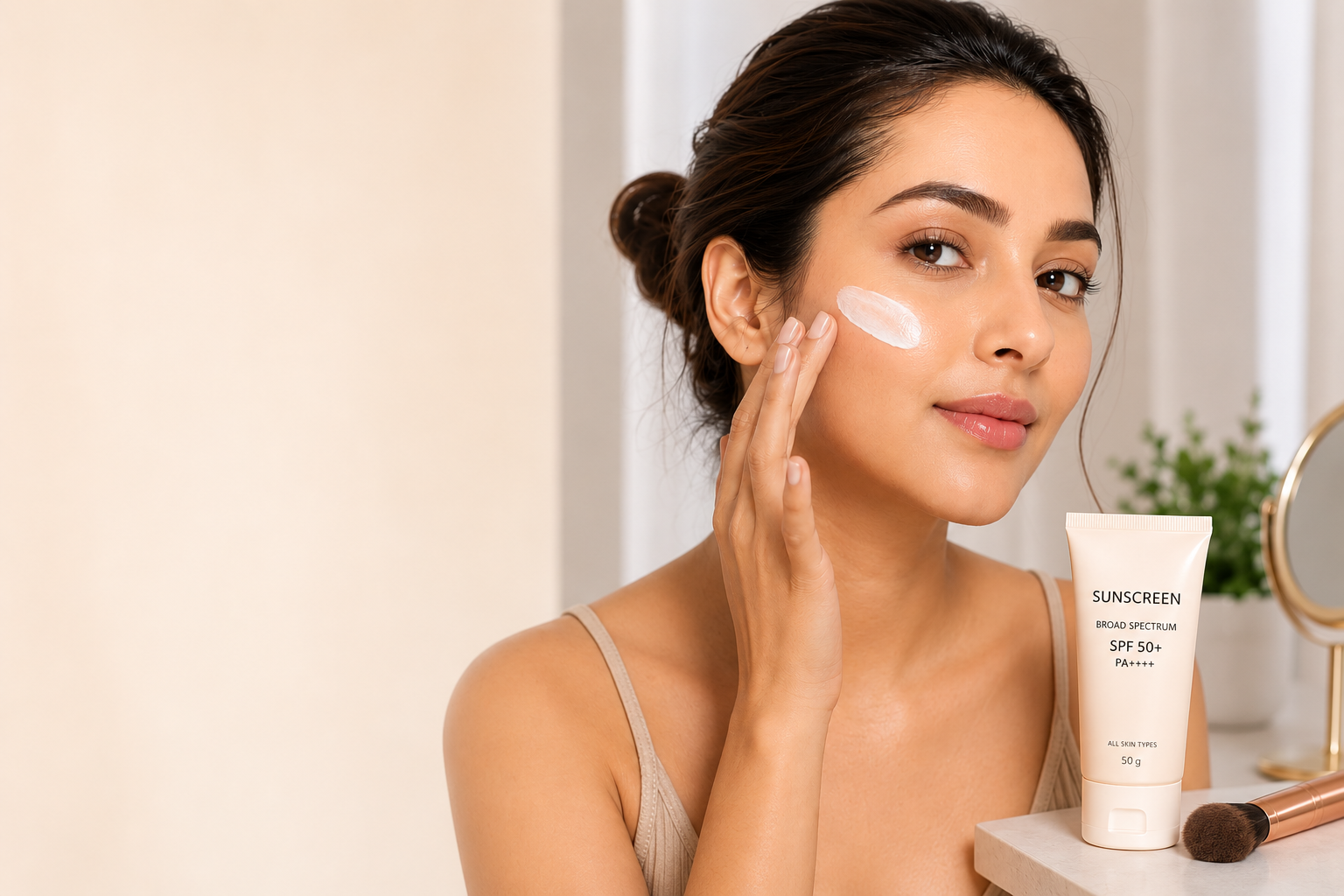
If you wear makeup almost every day, sunscreen can sometimes feel like the annoying step in the middle of your routine.
You apply moisturiser, then sunscreen, and suddenly your foundation doesn't sit the way it used to. Maybe your face looks too shiny. Maybe the makeup starts separating around your nose. Or perhaps you're left wondering whether the SPF in your foundation is enough.
So, what SPF should you actually wear under makeup?
For everyday use, SPF 30 or higher is a good starting point. If you're regularly exposed to sunlight, especially while commuting, driving or spending time outdoors, choosing an SPF 50 sunscreen makes sense.
But the SPF number isn't the only thing that matters. The sunscreen's texture, finish and how it behaves on your skin can make a big difference to your makeup.
SPF 30 or SPF 50: Which One Should You Choose?
If you're confused between SPF 30 and SPF 50, don't overthink it.
Both can be useful. The bigger difference in your daily routine often comes down to how much sun you're getting and whether you're applying enough sunscreen.
If you're mostly indoors and only have short periods of outdoor exposure, SPF 30 or above may be suitable. If you're outside regularly, SPF 50 is a practical choice.
And there's one thing worth remembering: SPF 50 doesn't mean you can apply less.
You still need to use enough sunscreen to get the protection stated on the product.
The Best Sunscreen Under Makeup Is the One That Sits Well
This is where things get interesting.
Two sunscreens can have the same SPF, yet one may work beautifully under foundation while the other makes your makeup look greasy within an hour.
That's usually because of the texture.
If you have oily or combination skin, you may find that a lightweight gel or matte sunscreen works better under makeup. A silicone-based sunscreen can also give the skin a smoother feel, which can make foundation easier to blend.
For example, Aclaris Photon 360 Matte Sunscreen Gel SPF 50+ PA+++ has a lightweight gel texture and matte finish, making it a reasonable option if you don't like a shiny layer underneath your makeup.
Another option is UV Doux Gold Silicone Sunscreen Gel SPF 50 PA+++, which has a silicone-gel texture and matte finish.
If your skin is oily and prone to breakouts, AC Screen Acne Sunscreen Gel is another SPF 50 gel option available at Atomic Pharmacy.
What If Your Skin Is Dry?
Matte isn't automatically better.
If your skin is dry, a very mattifying sunscreen can sometimes make dry areas more noticeable once you put foundation over them.
In that case, a lighter, more hydrating sunscreen may be easier to work with.
Suncros Aqua Lotion SPF 50 is a water-based SPF 50 option that provides hydration along with sun protection and may be worth considering if your skin tends to feel dry or tight.
The idea is simple: choose the sunscreen according to your skin, not just according to the highest SPF number on the bottle.
What About Tinted Sunscreen?
This is one of the easiest ways to simplify your morning routine.
A tinted sunscreen gives you sun protection while adding a little colour to the skin. You may not even need a full layer of foundation on days when you only want to even out your complexion.
For example, Softscreen+ Matte Tinted Sunscreen Gel SPF 50+ PA+++ combines SPF 50+ protection with a matte tinted finish.
Atomic Pharmacy also stocks Aclaris Photon Tint 360 Sunscreen Gel SPF 50+ PA+++, which can be an option if you'd like a tinted sunscreen rather than applying sunscreen and foundation separately.
Just keep in mind that a tinted sunscreen shouldn't be applied too sparingly simply because it gives your skin some colour. You still need to apply an adequate amount for sun protection.
Where Does Sunscreen Go in a Makeup Routine?
Sunscreen should come before makeup.
A simple morning routine could look like this:
Cleanser → Moisturiser (if needed) → Sunscreen → Foundation/Makeup
You don't need to put sunscreen on top of your foundation as the first step.
Once you've applied your sunscreen, give it a little time to settle before starting your makeup. You don't need to wait forever—just enough time for the product to settle comfortably on your skin.
Then apply your primer or makeup as usual.
Why Does My Makeup Become Patchy After Sunscreen?
If this happens to you, you're definitely not alone.
Sometimes the problem isn't the makeup at all. It can be the combination of products underneath it.
For example, you might be using:
- A rich moisturiser
- A heavy sunscreen
- A silicone-based primer
- A full-coverage foundation
Individually, these products may work perfectly well. Together, they may simply be too much.
Try simplifying your morning routine. If your sunscreen already feels moisturising, you may not need a very rich moisturiser underneath it.
Also, avoid rubbing your foundation aggressively over the sunscreen. Gentle blending usually works better.
And if your sunscreen leaves your skin very oily, switching to a matte or gel formula may solve the problem without changing your makeup.
Should You Mix Sunscreen With Foundation?
It's better not to.
You may see this trick suggested online because it makes the makeup feel lighter, but mixing sunscreen with foundation changes the way you're applying the sunscreen. You also can't be sure you're using enough sunscreen to get the protection shown on the label.
Apply your sunscreen separately.
Then apply your foundation.
It's one extra step, but it's a much better habit.
How Much Sunscreen Should You Apply Before Makeup?
This is probably more important than whether you choose SPF 30 or SPF 50.
Don't use just a tiny amount because you're worried about ruining your makeup.
Sunscreen needs to be applied generously enough to provide the protection stated on the product.
A useful approach is to use the commonly recommended two-finger amount for the face and neck, adjusting as appropriate for the product and the areas you're covering.
If the sunscreen feels too heavy at that amount, that's a sign that you may need to find a texture you like better—not that you should automatically use less.
Do You Need to Reapply Sunscreen Over Makeup?
If you're spending time outdoors, yes, sunscreen needs to be reapplied.
And this is where wearing makeup can make things a little inconvenient.
You don't necessarily want to smear a thick layer of sunscreen over your carefully applied foundation.
If you'll be outdoors for several hours, plan your reapplication rather than treating sunscreen as a one-time morning step. Depending on your makeup and the situation, you may need to carefully reapply sunscreen and then touch up your makeup.
If you're going from your bedroom to your car, then into an office and staying indoors most of the day, your exposure is obviously very different from someone spending the afternoon outside.
Your sunscreen routine should reflect your actual day.
So, Which SPF Should You Wear Under Makeup?
If you want the simple answer:
Choose SPF 30 or higher for everyday use, and SPF 50 if you're regularly exposed to sunlight.
Then look at the texture.
For oily skin, a lightweight gel or matte sunscreen may sit more comfortably under makeup.
For dry skin, a more hydrating formula may prevent your foundation from emphasising dry patches.
For days when you want less makeup, a tinted sunscreen can combine sun protection with a little complexion coverage.
Atomic Pharmacy has a range of sunscreen textures and SPF levels, including gel, matte, hydrating and tinted formulas. You can browse the complete sunscreen collection here.
The best sunscreen isn't necessarily the one with the biggest SPF number or the most expensive formula.
It's the one you'll apply properly, wear comfortably and remember to use every day.
A Quick Makeup-Friendly Sunscreen Routine
If you want to keep things uncomplicated, try this:
Morning
- Cleanse your face.
- Apply moisturiser if your skin needs it.
- Apply your SPF 30+ or SPF 50 sunscreen generously.
- Let it settle for a few minutes.
- Apply primer if you use one.
- Finish with your foundation and other makeup.
And if your makeup repeatedly looks greasy, patchy or starts sliding off, don't immediately blame the foundation.
Your sunscreen might simply not be the right texture for your skin.
Sometimes changing that one product is enough to make the whole routine feel much better.
Frequently Asked Questions
Is SPF 50 better than SPF 30 under makeup?
SPF 50 provides a higher level of SPF protection than SPF 30, but both can be appropriate choices. For regular outdoor exposure, SPF 50 is a practical option. Proper application and reapplication are just as important.
Can I wear sunscreen and foundation together?
Absolutely. Apply sunscreen first, allow it to settle, and then apply your makeup. Choosing a sunscreen with a finish that suits your skin can help your foundation sit more comfortably.
What is the best sunscreen under makeup for oily skin?
A lightweight gel or matte sunscreen is often a good place to start if you have oily skin. Options such as Aclaris Photon 360 Matte Sunscreen Gel SPF 50+ and AC Screen Acne Sunscreen Gel SPF 50 are available at Atomic Pharmacy.
Can I use tinted sunscreen instead of foundation?
You can, particularly if you only want light complexion coverage. A tinted sunscreen can make your morning routine quicker while still giving you sun protection.
Should I apply moisturiser before sunscreen?
If your skin needs moisturiser, yes. Apply moisturiser first and sunscreen afterwards. If your sunscreen already provides enough hydration for your skin, you may not need a separate moisturiser in the morning.
How long should I wait between sunscreen and makeup?
Give your sunscreen a few minutes to settle before applying makeup. You don't need to wait an unusually long time; the main goal is to avoid immediately rubbing the sunscreen around while applying your next product.
Can I skip sunscreen if my foundation has SPF?
It's better not to rely on foundation alone for your daily sun protection. Most people don't apply enough foundation to achieve the SPF stated on the label. A dedicated sunscreen underneath your makeup provides a more reliable approach.