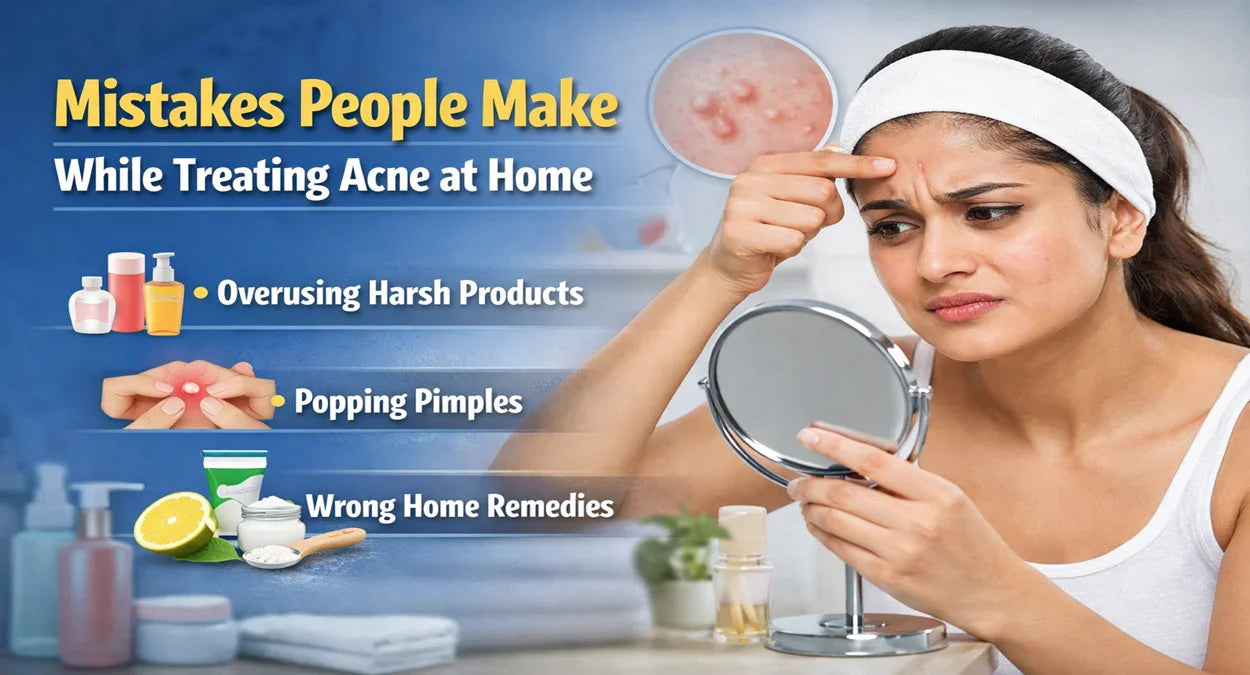
Acne is one of the most common skin concerns in India, affecting teenagers, young adults, and even people in their 30s and 40s. While mild acne can often be managed at home, many people unknowingly make mistakes that actually worsen breakouts, delay healing, or cause long-term skin damage.
At Atomic Pharmacy, we often see patients who tried multiple home remedies, internet hacks, or over-the-counter products before finally seeking proper guidance — and in many cases, their acne had become more stubborn because of these mistakes.
This blog explains the most common mistakes people make while treating acne at home, why they happen, and what you should do instead — in a safe, medically responsible way.
Why Acne Treatment Needs the Right Approach
Acne is not just a surface problem. It involves:
- Excess oil production
- Blocked pores
- Bacterial growth
- Inflammation
- Hormonal influence
Because of this, treating acne needs patience, consistency, and the right combination of skincare and lifestyle choices. Unfortunately, quick fixes and myths often do more harm than good.
1. Using Too Many Products at the Same Time
One of the biggest mistakes people make is using multiple acne products together, hoping for faster results.
You might be using:
· A face wash for acne
· A spot treatment
· A serum
· A scrub
· A home remedy
· A medicated cream
All at once.
Why this is harmful:
Overusing products can:
· Damage your skin barrier
· Cause dryness and peeling
· Trigger more oil production
· Make acne worse instead of better
Skin needs balance, not overload.
What to do instead:
Stick to a simple routine:
· A gentle cleanser
· One active treatment (like salicylic acid or benzoyl peroxide, if suitable)
· A non-comedogenic moisturiser
· Sunscreen during the day
If acne doesn’t improve in 6–8 weeks, it’s better to consult a professional rather than adding more products.
2. Using Home Remedies Without Understanding Skin Type
Applying ingredients like lemon, toothpaste, baking soda, or raw garlic on acne is still very common in Indian households.
Why this is risky:
· These ingredients are too harsh for facial skin
· They disturb the natural pH
· Can cause chemical burns or pigmentation
· Often worsen acne marks
Just because something is “natural” doesn’t mean it’s safe for facial skin.
A safer approach:
If you prefer gentle care, choose pharmacy-approved products that are tested for skin safety. Ingredients like niacinamide, salicylic acid, or azelaic acid (in the right concentration) are far safer than kitchen remedies.
3. Overwashing the Face
Many people believe acne happens because the skin is “dirty,” so they wash their face 4–5 times a day.
Why this backfires:
· Strips natural oils
· Causes dryness and irritation
· Triggers more oil production as a defence mechanism
This cycle often leads to more breakouts.
Ideal practice:
· Cleanse your face twice daily (morning and night)
· After sweating heavily, use a gentle cleanser, not harsh soap
4. Ignoring Moisturiser Because of Oily Skin
This is one of the most common misconceptions.
The truth:
Even oily and acne-prone skin needs moisturisation.
Skipping moisturiser can:
· Increase oil production
· Worsen acne
· Cause flaky, irritated skin
What works better:
Use a lightweight, oil-free, non-comedogenic moisturiser. This helps maintain skin balance and improves tolerance to acne treatments.
5. Popping Pimples at Home
Almost everyone has done this at some point, but it’s one of the worst habits for acne.
Why popping is harmful:
· Pushes bacteria deeper into the skin
· Increases inflammation
· Leads to dark spots and scars
· Can cause infection
Better option:
If a pimple is painful or persistent, it’s better to let it heal or consult a dermatologist for safe extraction or treatment.
6. Using Someone Else’s Prescription Products
Using a friend’s acne cream or leftover medication is a serious mistake.
Why this is dangerous:
· Some acne medicines are prescription-only for a reason
· Wrong usage can cause irritation or burns
· Certain treatments are not safe during pregnancy
Always remember: what works for one skin type may harm another.
7. Expecting Overnight Results
Acne treatment takes time. Many people stop using a product just because they don’t see results in one week.
Reality check:
· Most acne treatments take 4–6 weeks to show improvement
· Initial purging can happen
· Consistency matters more than speed
Switching products too quickly often resets progress.
8. Ignoring Diet and Lifestyle Factors
While food alone doesn’t cause acne, certain habits can worsen it:
· High sugar intake
· Excess dairy for some people
· Poor sleep
· High stress
A balanced diet, hydration, and stress management play an important supporting role in skin health.
9. Not Using Sunscreen During Acne Treatment
Many acne medications make the skin sensitive to sunlight.
Skipping sunscreen can lead to:
· Dark acne marks
· Uneven skin tone
· Delayed healing
Choose a non-greasy, non-comedogenic sunscreen suitable for acne-prone skin.
10. Delaying Professional Help
If acne:
· Keeps recurring
· Leaves dark spots or scars
· Is painful or cystic
It’s a sign that home care may not be enough.
Consulting a qualified dermatologist can prevent long-term damage and reduce treatment duration.
How Atomic Pharmacy Can Help
At Atomic Pharmacy, we focus on providing:
· Genuine, pharmacy-grade skincare products
· Dermatologist-recommended solutions
· Proper guidance for safe usage
· Trusted brands suitable for Indian skin types
You can explore:
· Medicated creams (as prescribed)
· Sunscreens suitable for acne-prone skin
Final Thoughts
Acne is common, but wrong treatment choices can make it harder to manage. Instead of experimenting endlessly, focus on understanding your skin, using the right products, and being consistent.
Safe skincare isn’t about quick fixes — it’s about informed decisions.
If your acne doesn’t improve with basic care, seeking professional guidance can save both your skin and your time.