Hair fall, thinning, and loss of volume are among the most common concerns people face today. From stress and pollution to hormonal changes and improper hair care, many factors affect hair health. While no shampoo alone can magically regrow hair overnight, dermatologist-recommended shampoos play a crucial role in supporting hair growth and improving thickness when used consistently and correctly.
In this guide, we’ll break down what actually works, which ingredients dermatologists trust, and how to choose the right shampoo for hair growth and thickness—without myths or exaggerated claims.
Can a Shampoo Really Help with Hair Growth & Thickness?
This is a question dermatologists hear often.
A shampoo’s primary role is to clean the scalp—but a healthy scalp is the foundation of healthy hair growth. When dirt, excess oil, dandruff, or inflammation block hair follicles, hair growth slows down and thinning becomes more noticeable.
A dermatologist-recommended shampoo helps by:
- Keeping hair follicles clean and active
- Reducing scalp inflammation
- Controlling dandruff and excess oil
- Supporting stronger, thicker-looking hair
While shampoos don’t replace medical treatments like Minoxidil or PRP, they significantly support overall hair health and treatment outcomes.
Dermatologist-Recommended Ingredients That Actually Work
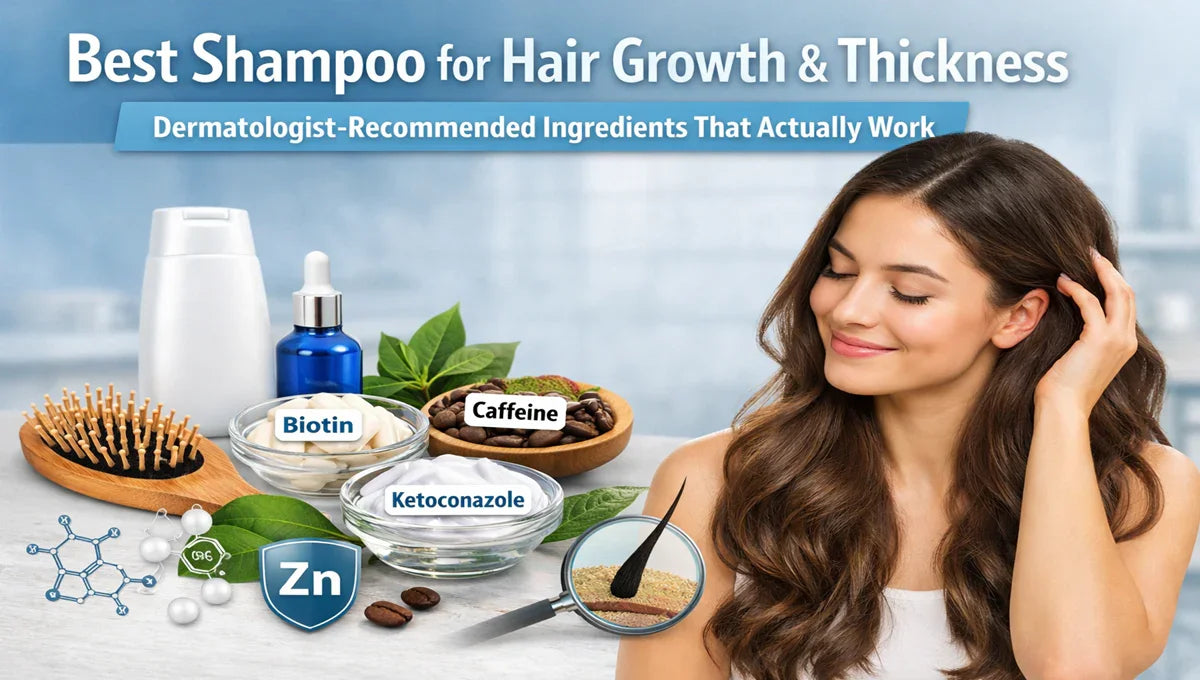
Not all shampoos are created equal. Dermatologists focus on clinically studied ingredients, not marketing claims. Here are some key ingredients commonly found in pharmacy-grade hair growth shampoos:
1. Caffeine
Caffeine helps stimulate hair follicles and may reduce hair fall caused by weakened roots. Dermatologists often recommend caffeine-based shampoos for early-stage thinning.
Best for:
Weak hair
Mild hair thinning
Low hair density
2. Ketoconazole
Originally used as an antifungal agent, ketoconazole is widely recommended by dermatologists for dandruff and scalp inflammation. Studies suggest it may also help reduce hair fall linked to scalp issues.
Best for:
Dandruff-related hair fall
Itchy, flaky scalp
Oily scalp
3. Biotin (Vitamin B7)
Biotin supports keratin production, which improves hair strength and thickness over time. While oral biotin helps internally, topical biotin shampoos support hair texture and breakage control.
Best for:
Brittle hair
Breakage
Thin, lifeless hair
4. Niacinamide (Vitamin B3)
Niacinamide improves blood circulation to the scalp and strengthens the skin barrier, creating a healthier environment for hair growth.
Best for:
Weak roots
Sensitive scalp
Hair thinning due to poor scalp health
5. Zinc Pyrithione
This ingredient helps control dandruff and scalp irritation, both of which can worsen hair fall if left untreated.
Best for:
Chronic dandruff
Scalp irritation
Hair fall caused by flaking
Ingredients Dermatologists Often Advise to Avoid
For people experiencing hair thinning, dermatologists usually recommend avoiding:
· Harsh sulfates that over-dry the scalp
· Excessive artificial fragrance
· Alcohol-heavy formulations
These can worsen dryness, irritation, and hair breakage over time.
How to Choose the Best Shampoo for Your Hair Type
There is no one-size-fits-all shampoo. Dermatologists select shampoos based on scalp condition, not just hair texture.
If You Have Hair Fall with Oily Scalp:
· Look for ketoconazole or salicylic acid-based shampoos
· Avoid heavy conditioning shampoos
If You Have Dry, Thinning Hair:
· Choose mild, sulfate-free shampoos with biotin or niacinamide
· Pair with a nourishing conditioner
If You Have Dandruff & Hair Fall:
· Use a medicated anti-dandruff shampoo 2–3 times a week
· Alternate with a gentle daily-use shampoo
How Often Should You Use Hair Growth Shampoos?
Dermatologists usually recommend:
· 2–3 times a week for medicated shampoos
· Daily or alternate-day use for gentle, non-medicated shampoos
Overwashing can strip natural oils, while underwashing can clog follicles—balance is key.
Common Myths About Hair Growth Shampoos
Myth: Shampoo alone can regrow lost hair
Reality: Shampoo helps maintain scalp health, but actual hair regrowth depends on the underlying cause and often requires targeted treatments.
Myth: More foam means better cleaning
Reality: The amount of foam does not determine how effective a shampoo is at cleansing the scalp or hair.
Myth: Natural shampoos always work better
Reality: Dermatologist-tested and clinically formulated shampoos are often more effective for managing medical hair and scalp concerns.
Why Dermatologists Prefer Pharmacy-Grade Shampoos
Dermatologist-recommended shampoos available at trusted pharmacies are:
· Backed by clinical research
· Formulated for specific scalp conditions
· Tested for safety and long-term use
This is why people dealing with persistent hair fall or thinning often see better results with pharmacy-based hair care products rather than cosmetic shampoos.
Final Thoughts: What Actually Works for Hair Growth & Thickness
The best shampoo for hair growth and thickness:
· Supports scalp health
· Contains dermatologist-recommended ingredients
· Matches your scalp type and concern
· Is used consistently as part of a complete hair care routine
For ongoing or severe hair loss, dermatologists always advise combining the right shampoo with proper diagnosis, lifestyle changes, and medical treatments when required.
About Atomic Pharmacy
Atomic Pharmacy provides authentic, dermatologist-recommended skin and hair care products, helping individuals choose clinically trusted solutions for long-term results.
Frequently Asked Questions (FAQs)
1. Can hair growth shampoos stop hair fall completely?
Hair growth shampoos help reduce hair fall caused by scalp issues such as dandruff, excess oil, or inflammation. However, they cannot completely stop hair fall if the cause is hormonal, genetic, or medical. In such cases, shampoos work best as a supportive part of a complete treatment plan.
2. How long does it take to see results from a hair growth shampoo?
Most dermatologist-recommended shampoos show visible improvement in scalp health within 3–4 weeks. Improvements in hair strength, reduced breakage, and better thickness may take 8–12 weeks with regular use.
3. Are hair growth shampoos suitable for men and women?
Yes, most hair growth shampoos are suitable for both men and women. The key is choosing a shampoo based on scalp condition (oily, dry, dandruff-prone) rather than gender.
4. Can I use a hair growth shampoo daily?
This depends on the formulation. Gentle, non-medicated shampoos can be used daily or on alternate days. Medicated shampoos are usually recommended 2–3 times a week unless advised otherwise by a dermatologist.
5. Do sulfate-free shampoos work better for hair thinning?
Sulfate-free shampoos are often gentler on the scalp and hair, making them a good option for people with dry, sensitive, or thinning hair. However, effectiveness depends more on active ingredients than on whether a shampoo is sulfate-free.
6. Should I use conditioner with a hair growth shampoo?
Yes. Conditioner helps reduce breakage and improves hair texture. Apply conditioner only to the hair lengths and ends, not directly on the scalp, especially if you have hair fall or oily scalp issues.
7. When should I consult a dermatologist for hair fall?
If hair fall continues despite using the right shampoo for 2–3 months, or if you notice sudden hair thinning, patchy hair loss, or scalp irritation, it’s best to consult a dermatologist for proper diagnosis and treatment.