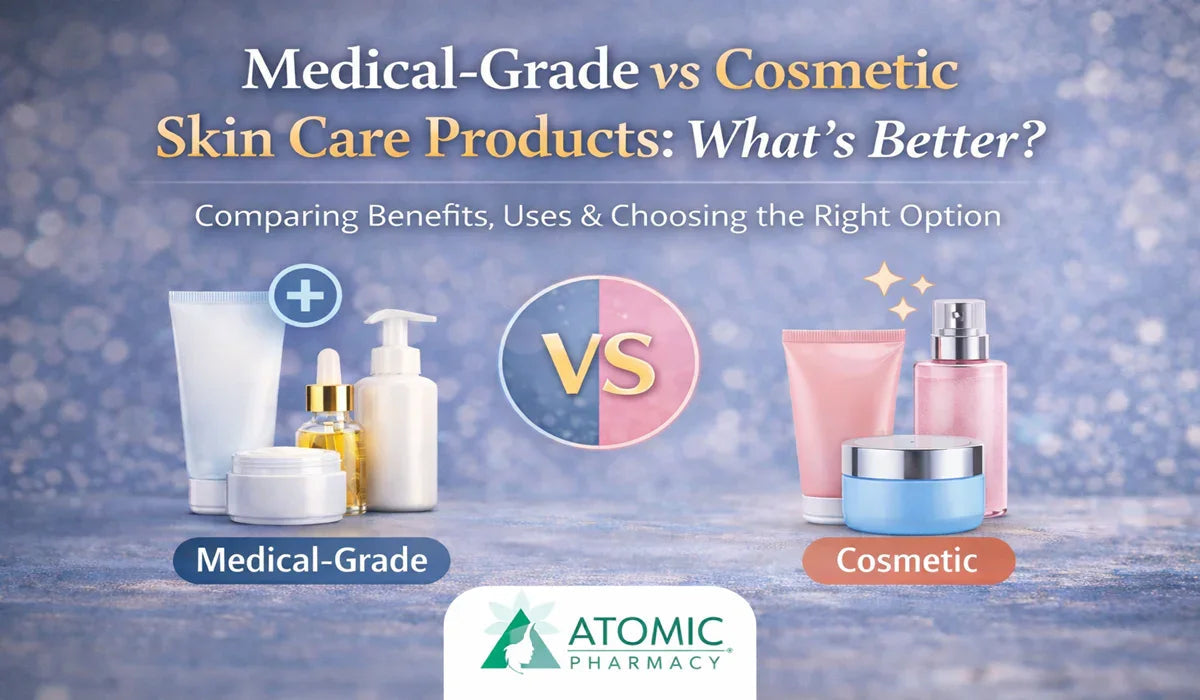
Skin care has evolved far beyond simple face creams and cleansers. Today, consumers often come across two broad categories — medical-grade skin care and cosmetic skin care products. While both aim to support healthy skin, they differ in formulation, purpose, and usage. Many people struggle to decide which option is suitable for their needs, especially when dealing with concerns like acne, pigmentation, dryness, or sensitivity.
This guide explains the differences between medical-grade and cosmetic skin care products in a clear, practical way. It also helps you understand how to use them responsibly and when to seek professional guidance.
Product Introduction: Understanding the Real Need
A common scenario seen in pharmacy practice is people trying multiple cosmetic products without seeing improvement in persistent skin problems. Issues such as recurring acne, damaged skin barrier, or stubborn dark spots may require more targeted care.
Medical-grade skin care products are formulated with specific active ingredients intended to support skin conditions. Cosmetic products, on the other hand, are primarily designed for daily maintenance and surface-level improvement.
Understanding which category suits your situation helps prevent unnecessary irritation and saves time, money, and frustration.
What Are Medical-Grade Skin Care Products?
Medical-grade skin care products are typically developed using dermatological research and often contain clinically studied active ingredients. Many are available through pharmacies and may be recommended by dermatologists for specific skin concerns.
How They Work
Unlike general cosmetic products, medical-grade formulations are designed to support deeper layers of the skin and address underlying issues. Examples of commonly used active ingredients include:
· Retinoids for skin renewal and acne management
· Niacinamide for oil control and barrier support
· Ceramides for repairing dry or compromised skin
· Azelaic acid for uneven skin tone and mild acne
Because these ingredients can influence how the skin functions, proper usage and guidance are important.
What Are Cosmetic Skin Care Products?
Cosmetic skin care products are commonly used for:
· Basic cleansing
· Moisturizing
· Maintaining skin comfort and appearance
They are widely available and generally suitable for people without active dermatological conditions.
How They Work
Cosmetic products usually act on the surface of the skin to:
· Improve hydration
· Provide temporary smoothness
· Support daily skin hygiene
For many individuals with normal or mildly dry skin, cosmetic products can be sufficient for maintaining healthy skin balance.
Key Benefits of Medical-Grade Skin Care Products
Medical-grade products are often preferred when dealing with persistent or moderate skin concerns. Their advantages include:
· Targeted action for specific conditions
· Evidence-backed ingredient formulations
· Focus on long-term skin health
· Guidance from dermatologists or pharmacists
Real-World Usage Example
A person with long-term acne may find that cosmetic face washes alone provide limited results. A pharmacy-grade treatment recommended by a professional may help reduce breakouts when used correctly and consistently.
Key Benefits of Cosmetic Skin Care Products
Cosmetic products remain an important part of skin care routines. They offer:
· Gentle daily maintenance
· Beginner-friendly formulations
· Support for hydration and comfort
· Ease of use for people with balanced skin
These products are often suitable for routine cleansing, light moisturization, and prevention-focused care.
How to Use Medical-Grade and Cosmetic Products Safely
Medical-Grade Products
· Start with a small amount to monitor tolerance
· Follow professional advice or product instructions
· Avoid combining multiple strong actives without guidance
· Use sunscreen if using ingredients that increase sensitivity
Cosmetic Products
· Choose according to your skin type
· Maintain a simple routine
· Avoid over-layering multiple products
· Monitor how your skin reacts over time
Consistency and patience are more important than using many products at once.
Who Should Consider Medical-Grade Skin Care?
Medical-grade skin care may be beneficial for individuals experiencing:
· Persistent acne or breakouts
· Uneven pigmentation
· Extremely dry or damaged skin
· Sensitive skin requiring barrier repair
· Oily skin needing targeted oil control
Who Should Be Careful
Certain individuals should seek professional guidance before using strong active products:
· Pregnant or breastfeeding individuals
· People with known allergies
· Those currently using prescription medications
· Individuals with severe skin conditions
Professional consultation helps reduce the risk of irritation or misuse.
Possible Side Effects and Precautions
Even well-formulated products can cause reactions if not used properly. Some possible effects include:
· Temporary dryness or peeling
· Mild redness during early use
· Increased sensitivity to sunlight
Safety Tips
· Always patch test new products
· Introduce new active ingredients gradually
· Avoid mixing multiple treatments without advice
· Discontinue use if severe irritation occurs
Cosmetic products may also trigger reactions if unsuitable for your skin type, so reviewing ingredient lists is important.
Why Buy Skin Care Products from Atomic Pharmacy?
Atomic Pharmacy focuses on providing genuine and carefully sourced products for Indian consumers. Customers benefit from:
· Authentic dermatology products
· Reliable sourcing practices
· Availability of doctor-recommended formulations
· Clear information on prescription requirements
· Proper storage and handling of sensitive products
Buying from a trusted pharmacy reduces the risk of counterfeit or unsuitable products and supports safe usage.
FAQs – Medical-Grade vs Cosmetic Skin Care
Q1. Are medical-grade skin care products always necessary?
Not necessarily. They are typically used for specific concerns rather than general maintenance.
Q2. Can cosmetic products replace medical treatments?
Cosmetic products may help with mild issues but may not address deeper or persistent skin conditions.
Q3. Do medical-grade products require a prescription?
Some require prescriptions, while others are available over the counter but still benefit from professional advice.
Q4. Is it safe to combine both types?
Yes, but introduce products gradually and monitor how your skin responds.
Conclusion
Medical-grade and cosmetic skin care products both play important roles in maintaining healthy skin. Cosmetic products are ideal for daily care and maintenance, while medical-grade products are better suited for targeted concerns such as acne, pigmentation, or barrier repair.
The best approach is to understand your skin type, use products responsibly, and seek guidance when needed. Always consult a dermatologist or pharmacist before starting new treatments, especially those with active ingredients. To ensure safety and authenticity, purchase only genuine, doctor-recommended products from Atomic Pharmacy, your trusted online pharmacy partner in India.