
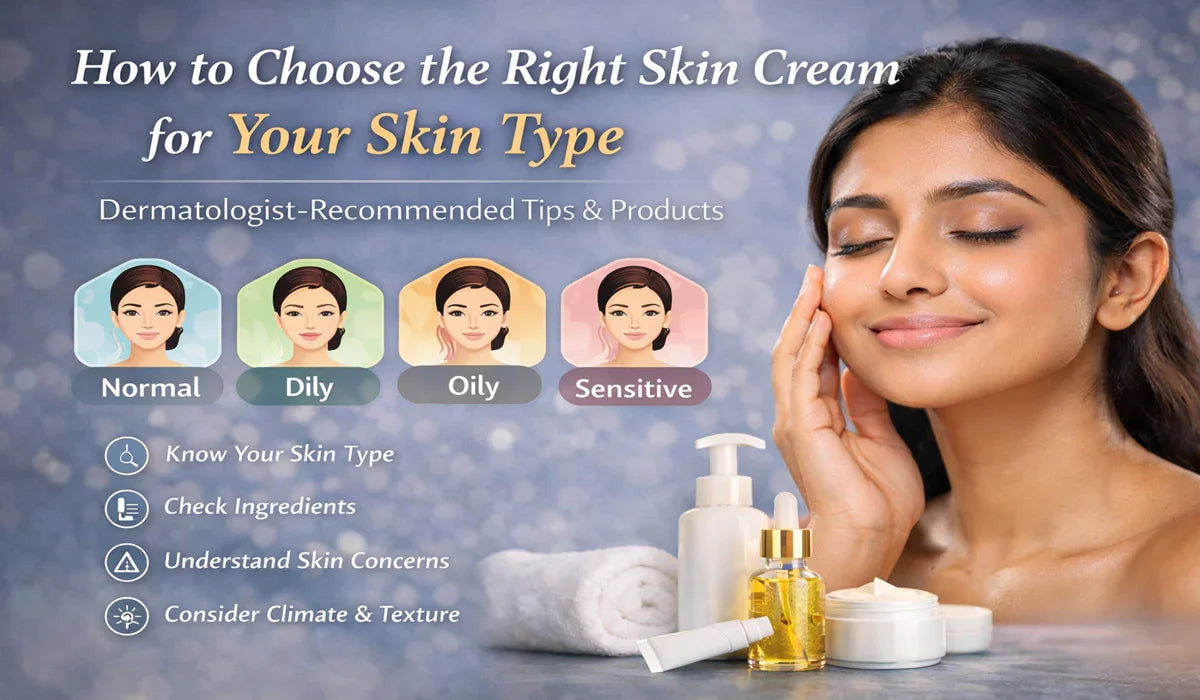
Choosing the right skin cream is one of the most important decisions in any skin care routine. A cream that works well for one person may not suit another, even if they appear to have similar skin. Factors like skin type, climate, lifestyle, and existing skin concerns all play a role in how a product performs.
With hundreds of options available online, many people end up selecting skin creams based on advertisements or recommendations from friends. Unfortunately, this often leads to dryness, breakouts, irritation, or wasted money. This guide explains how to choose the right skin cream for your skin type using dermatology-backed principles and real-life skin care needs.
Why Choosing the Right Skin Cream Is Important
Your skin acts as the body’s first line of defense. It protects you from pollution, bacteria, and environmental damage. When the skin barrier is healthy, it retains moisture and stays balanced. When it is compromised, issues like dryness, acne, sensitivity, and uneven texture can develop.
Using a skin cream that matches your skin’s needs helps:
· Maintain proper hydration
· Strengthen the skin barrier
· Reduce irritation and inflammation
· Support natural skin repair
Pharmacy-grade skin creams are formulated to prioritize skin health and safety, which is why dermatologists often recommend them over purely cosmetic products.
Step 1: Understand Your Skin Type Correctly
Knowing your skin type is the foundation of choosing the right cream.
Normal Skin
Normal skin feels comfortable most of the time. It is neither too oily nor too dry and rarely reacts to products.
What it needs:
· Light hydration
· Maintenance of skin balance
Creams with simple moisturizing ingredients work well for normal skin.
Dry Skin
Dry skin often feels tight, rough, or flaky. It may worsen during winter or after washing.
Common causes:
· Lack of natural oils
· Harsh cleansers
· Environmental exposure
What it needs:
· Rich creams that lock in moisture
· Ingredients that repair the skin barrier
Helpful ingredients:
Ceramides, glycerin, hyaluronic acid, shea butter
Oily Skin
Oily skin produces excess sebum, leading to shine and frequent breakouts.
Common misconception:
Oily skin does not need moisturizer. In reality, skipping hydration can increase oil production.
What it needs:
· Lightweight, non-greasy creams
· Oil-free or gel-based textures
Look for:
Niacinamide, non-comedogenic formulations
Combination Skin
Combination skin has oily areas (usually the T-zone) and dry or normal areas elsewhere.
What it needs:
Balanced creams that hydrate without clogging pores.
Many users with combination skin prefer lightweight creams that absorb quickly.
Sensitive Skin
Sensitive skin reacts easily to products and environmental changes.
Common signs:
· Redness
· Itching
· Burning sensation
What it needs:
· Fragrance-free formulations
· Minimal ingredients
· Dermatologist-tested creams
Step 2: Identify Your Skin Concern
Skin type and skin concern are not the same. You may have oily skin with pigmentation or dry skin with acne.
Common concerns include:
· Acne and frequent breakouts
· Pigmentation and uneven tone
· Dryness and irritation
· Fine lines and early aging
Choosing a skin cream that addresses your primary concern while suiting your skin type is essential.
For example:
· Acne-prone skin benefits from calming, oil-free creams
· Pigmentation-prone skin needs barrier support and gentle brightening ingredients
· Dry skin with sensitivity needs soothing and deeply moisturizing formulations
Step 3: Read the Ingredient List Carefully
Ingredient awareness helps prevent irritation and disappointment.
Beneficial ingredients commonly found in skin creams:
· Ceramides: Help repair and protect the skin barrier
· Niacinamide: Improves skin texture and tone
· Hyaluronic Acid: Attracts and retains moisture
· Panthenol: Soothes irritated skin
Ingredients to be cautious with:
· Strong artificial fragrances
· High alcohol content
· Unnecessary essential oils, especially for sensitive skin
If you have a history of reactions, always review ingredient lists carefully.
Step 4: Choose the Right Texture for Indian Climate
India’s climate varies, but humidity and heat play a big role in how skin creams feel and perform.
· Creams and balms: Suitable for very dry skin or colder regions
· Lotions: Balanced option for most skin types
· Gels and gel-creams: Ideal for oily skin and humid weather
Texture affects comfort and consistency of use. A cream that feels heavy may discourage regular application, reducing its effectiveness.
Step 5: Day Creams vs Night Creams
Not all skin creams serve the same purpose.
Day Creams
· Lightweight
· Designed for hydration and comfort
· Often paired with sunscreen
Night Creams
· Richer texture
· Focus on skin repair and barrier recovery
· Often contain nourishing ingredients
Using separate creams for day and night helps support your skin’s natural repair cycle.
Step 6: Consider Age and Lifestyle Factors
Skin needs change with age and lifestyle.
· Younger skin may need basic hydration
· Mature skin may benefit from barrier-strengthening creams
· People exposed to pollution may need protective formulations
Stress, lack of sleep, and frequent makeup use can also influence skin condition.
Who Should Consult a Professional Before Choosing a Skin Cream?
You should speak to a dermatologist or pharmacist if:
· You have ongoing skin conditions
· You are pregnant or breastfeeding
· You are using prescription treatments
Certain medicated creams should only be used under medical supervision.
Why Buy Skin Creams from Atomic Pharmacy?
Atomic Pharmacy is a trusted online pharmacy in India known for:
· Genuine and verified products
· Dermatologist-recommended skin creams
· Proper storage and handling
· Clear prescription guidance
Buying from a reliable pharmacy reduces the risk of counterfeit or unsuitable products.
FAQs: Choosing the Right Skin Cream
Q1. Can one skin cream suit all skin types?
No. Skin needs vary, and using the wrong cream can cause irritation or breakouts.
Q2. Is expensive skin cream always better?
Not necessarily. The right ingredients and formulation matter more than price.
Q3. Should oily skin avoid creams completely?
No. Oily skin still needs hydration, but in lighter formulations.
Q4. How long should I use a skin cream before judging results?
Most creams need consistent use for at least 3–4 weeks to show results.
Conclusion
Choosing the right skin cream is about understanding your skin type, concerns, ingredients, and environment. Instead of following trends, focus on skin-friendly, pharmacy-grade formulations that support long-term skin health.
Always consult a healthcare professional if you are unsure about a product’s suitability. For authentic and doctor-recommended skin creams, trust Atomic Pharmacy—your reliable partner for safe and genuine skin care solutions.