
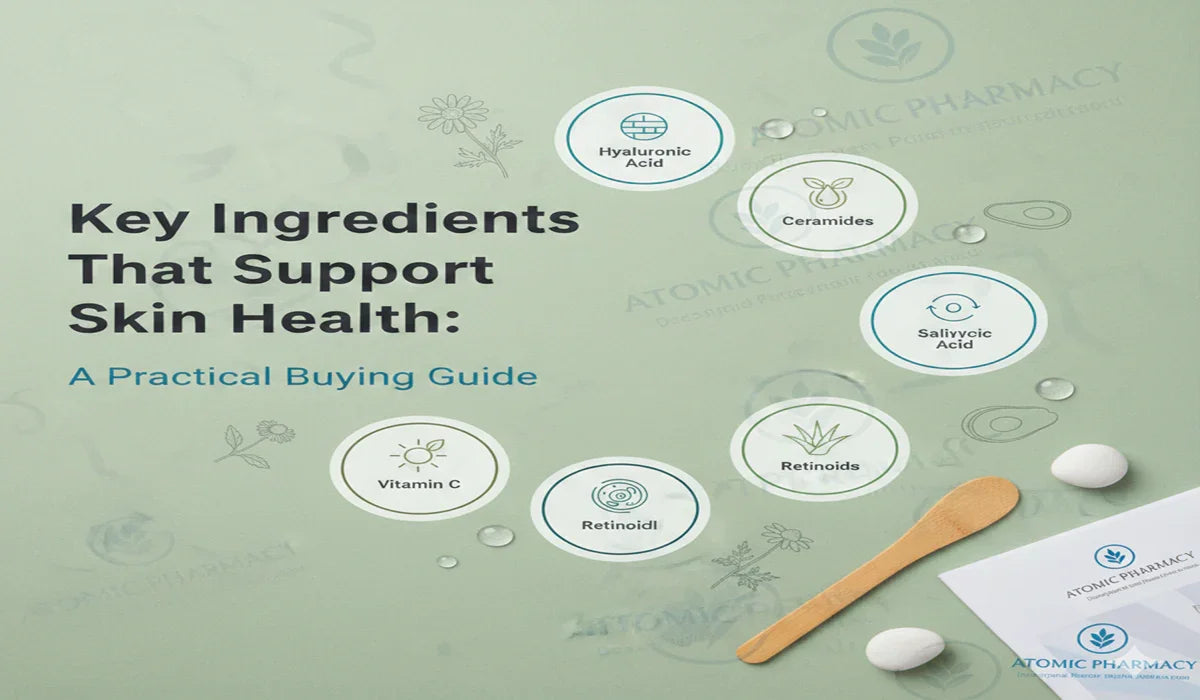
Choosing the right skin care product can feel overwhelming. Labels highlight multiple ingredients, but not all are suitable for every skin type.
At Atomic Pharmacy, many customers ask a simple question: Which ingredients actually help improve skin health?
The answer depends on your concern — dryness, acne, pigmentation, sensitivity, or early signs of aging. Below is a pharmacist-informed guide to help you choose wisely.
For Dry & Damaged Skin: Ceramides + Hyaluronic Acid
If your skin feels tight, flaky, or irritated:
· Ceramides help restore the skin barrier.
· Hyaluronic acid improves hydration levels.
Look for barrier-repair moisturizers available in pharmacy-grade formulations.
For Oily & Acne-Prone Skin: Niacinamide + Salicylic Acid
If you struggle with breakouts or enlarged pores:
· Niacinamide helps regulate oil production.
· Salicylic acid exfoliates inside pores.
Targeted acne-support products should be used as directed to avoid dryness.
For Pigmentation & Uneven Skin Tone: Vitamin C + Retinoids
If dullness or dark spots concern you:
· Vitamin C provides antioxidant protection.
· Retinoids support cell turnover.
Stronger retinoid-based products may require medical supervision.
For Sensitive Skin: Panthenol + Mild Formulations
If your skin reacts easily:
· Choose fragrance-free products.
· Look for panthenol and barrier-support ingredients.
Always patch test before full application.
Why Buy from Atomic Pharmacy?
· Genuine, properly stored products
· Access to dermatologist-recommended brands
· Clear guidance on prescription requirements
· Reliable online pharmacy service across India
Choosing products from a trusted pharmacy ensures authenticity and safe usage.
3. Ingredient Comparison Table
|
Ingredient |
Best For |
How It Works |
Suitable Skin Type |
Precautions |
|
Hyaluronic Acid |
Dryness, dehydration |
Attracts and retains moisture |
All skin types |
Rare irritation |
|
Ceramides |
Damaged barrier |
Strengthens skin barrier |
Dry, sensitive skin |
Generally well tolerated |
|
Niacinamide |
Oil control, redness |
Regulates sebum, reduces inflammation |
Oily, acne-prone skin |
Start low concentration |
|
Salicylic Acid |
Acne, clogged pores |
Exfoliates inside pores |
Oily, acne-prone |
May cause dryness |
|
Vitamin C |
Pigmentation, dullness |
Antioxidant, brightening support |
Most skin types |
Use sunscreen |
|
Retinoids |
Acne, aging concerns |
Increases cell turnover |
Acne-prone, aging skin |
Use at night, medical advice |
|
Panthenol |
Sensitivity, irritation |
Soothes and hydrates |
Sensitive skin |
Very low risk |
Key Ingredients That Support Skin Health: A Practical Guide
Healthy skin is not achieved through trends or complex routines. It depends on maintaining hydration, protecting the skin barrier, managing oil production, and preventing inflammation.
Many individuals try multiple products without understanding the role of active ingredients. In pharmacy settings, a common concern is irritation caused by using too many actives at once. Choosing the right ingredient for your specific skin need is more important than using multiple products.
This guide explains scientifically supported ingredients that help maintain healthy skin and how to use them responsibly.
Why Ingredients Matter More Than Brand Names
Skin care products often promote benefits such as “glow” or “anti-aging.” However, the effectiveness of a product depends largely on its active components.
Understanding ingredients helps you:
· Avoid unnecessary irritation
· Choose products suited to your skin type
· Support long-term skin health
· Prevent worsening of underlying concerns
Hydration and Barrier Support Ingredients
Hyaluronic Acid
Hyaluronic acid attracts water and helps maintain skin hydration. It does not exfoliate or thin the skin, making it suitable for most individuals.
It is commonly recommended for:
· Dehydrated skin
· Dull appearance
· Fine lines caused by dryness
Ceramides
Ceramides are naturally present in the skin barrier. When levels drop due to harsh cleansers, aging, or environmental exposure, skin becomes dry and sensitive.
Ceramide-containing products:
· Reduce water loss
· Improve barrier strength
· Support recovery from irritation
Barrier repair is often the first step before introducing stronger actives.
Oil Control and Acne-Support Ingredients
Niacinamide
Niacinamide, a form of Vitamin B3, supports multiple skin functions.
It helps:
· Regulate excess oil
· Reduce redness
· Improve uneven tone
· Strengthen the skin barrier
It is generally well tolerated and suitable for beginners.
Salicylic Acid
Salicylic acid is a beta hydroxy acid that penetrates pores and removes buildup.
It is often used for:
· Blackheads
· Whiteheads
· Mild acne
Overuse may lead to dryness. Gradual introduction is recommended.
Pigmentation and Skin Renewal Ingredients
Vitamin C
Vitamin C acts as an antioxidant and helps reduce oxidative stress from pollution and sunlight.
Benefits include:
· Improved brightness
· Reduced appearance of dark spots
· Support for collagen production
Daily sunscreen use is important when using brightening products.
Retinoids
Retinoids increase cell turnover and are widely studied in dermatology.
They are used for:
· Acne management
· Fine lines
· Uneven skin texture
Stronger formulations may require medical supervision. Initial dryness or mild irritation can occur during adjustment.
Soothing and Sensitivity Support
Panthenol
Panthenol supports hydration and reduces irritation. It is commonly included in products designed for sensitive or post-treatment skin.
It helps calm:
· Redness
· Mild irritation
· Barrier discomfort
How to Choose Based on Skin Type
· Dry Skin: Ceramides, hyaluronic acid
· Oily Skin: Niacinamide, salicylic acid
· Pigmentation: Vitamin C, retinoids
· Sensitive Skin: Ceramides, panthenol
Introducing one active ingredient at a time helps monitor tolerance.
Safety and Precautions
Even beneficial ingredients can cause reactions if misused.
Important guidelines:
· Patch test new products
· Avoid combining multiple strong actives initially
· Use sunscreen daily when using exfoliating or retinoid products
· Consult a dermatologist for persistent concerns
Individuals who are pregnant, breastfeeding, or under medical treatment should seek professional advice before using active treatments.
Why Product Authenticity Matters
Using counterfeit or improperly stored products can compromise both safety and effectiveness.
Purchasing from a trusted pharmacy like Atomic Pharmacy ensures:
· Genuine formulations
· Proper storage conditions
· Access to dermatologist-recommended brands
· Clear guidance on prescription requirements
This reduces the risk of product misuse or ineffective treatment.
Conclusion
Healthy skin depends on informed choices rather than complicated routines. Ingredients such as ceramides, niacinamide, salicylic acid, and vitamin C each serve specific roles in supporting skin function.
Understanding how these ingredients work allows you to build a safe, effective routine tailored to your needs.
For persistent skin concerns, consult a dermatologist or pharmacist before starting active treatments. Always choose genuine, pharmacy-sourced products to support safe and responsible skin care.