
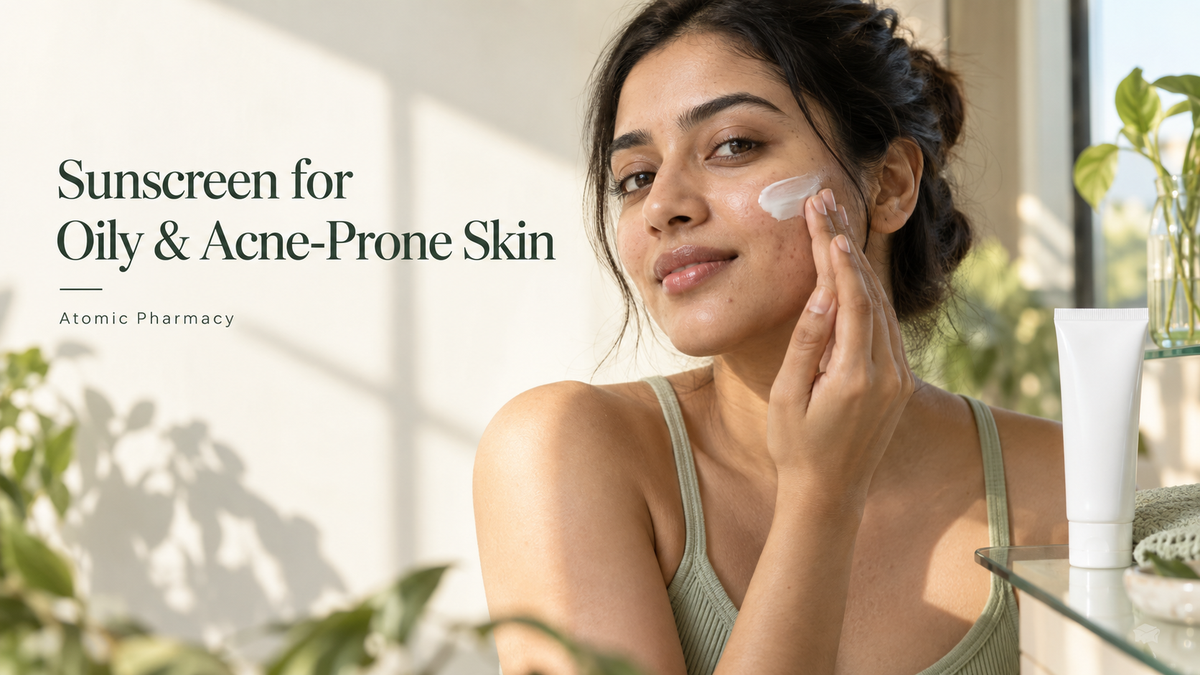
You put sunscreen on in the morning, and an hour later your face feels sticky. By lunchtime, your forehead is shiny. If you also get pimples, it is tempting to stop using sunscreen altogether.
Usually, the problem is the particular formula or how it sits with the rest of your routine. Finding one you like may take a little trial and error, but there are a few things you can check before buying another tube.
Read the front of the pack first
Choose a sunscreen marked broad spectrum with SPF 30 or higher. If you are outside for long periods or sweat a lot, check whether it is water resistant. The label tells you how long that resistance is meant to last.
After that, think about how it feels. There is little use buying a sunscreen with impressive claims if you can barely stand wearing it.
Pick a finish that suits your day
A light lotion or fluid often feels easier to wear when your face gets oily. Some people prefer a gel; others find that a cream sits better on their skin. “Matte” can be helpful if you dislike shine, but it is a description of the finish, not a guarantee that the sunscreen will suit you.
If a shop has a tester, apply some along your jaw and wait a few minutes. Notice whether it feels tacky, leaves a white cast or starts to roll up when you touch it. If you wear makeup, consider how the sunscreen sits underneath it too.
What about breakouts?
Look for oil-free or non-comedogenic on the label if clogged pores are a concern. Those words can help you narrow the shelf, but your skin gets the final say.
Try changing one product at a time. If you start a new sunscreen, cleanser and serum in the same week, it becomes hard to tell which one your skin dislikes. Give yourself a chance to notice whether the sunscreen feels comfortable over a few uses. Stop using it if it repeatedly stings or causes irritation.
Do you need a mineral sunscreen?
Not necessarily. Some people like mineral sunscreens because they feel gentler on their skin. Others find the texture too thick or notice a pale cast. A tinted option may blend more easily, though the shade still needs to suit your skin.
Instead of choosing solely by the type of filter, check the protection on the label and choose a formula you can apply generously. If your skin is easily irritated, a fragrance-free option is a sensible place to start.
Use enough, and put it back on
Apply sunscreen across your face, ears and neck before you go out. Do not use just a tiny dot to keep your face matte; that may leave you with less protection than the label promises.
If you are spending time outdoors, reapply about every two hours and after swimming or heavy sweating. A cap, shade and sunglasses also help on bright days.
Need help choosing?
If every sunscreen you try makes your skin uncomfortable, or you are dealing with painful or persistent acne, speak to a dermatologist. A sunscreen can protect your skin from the sun, but it will not treat the reason you are breaking out.
When you visit Atomic Pharmacy, tell us what went wrong with the last sunscreen you tried: too greasy, too drying, a white cast or a stinging feeling. Bring the tube or a photo of its label if you have it. That is more useful than shopping by a “best sunscreen” list alone.