
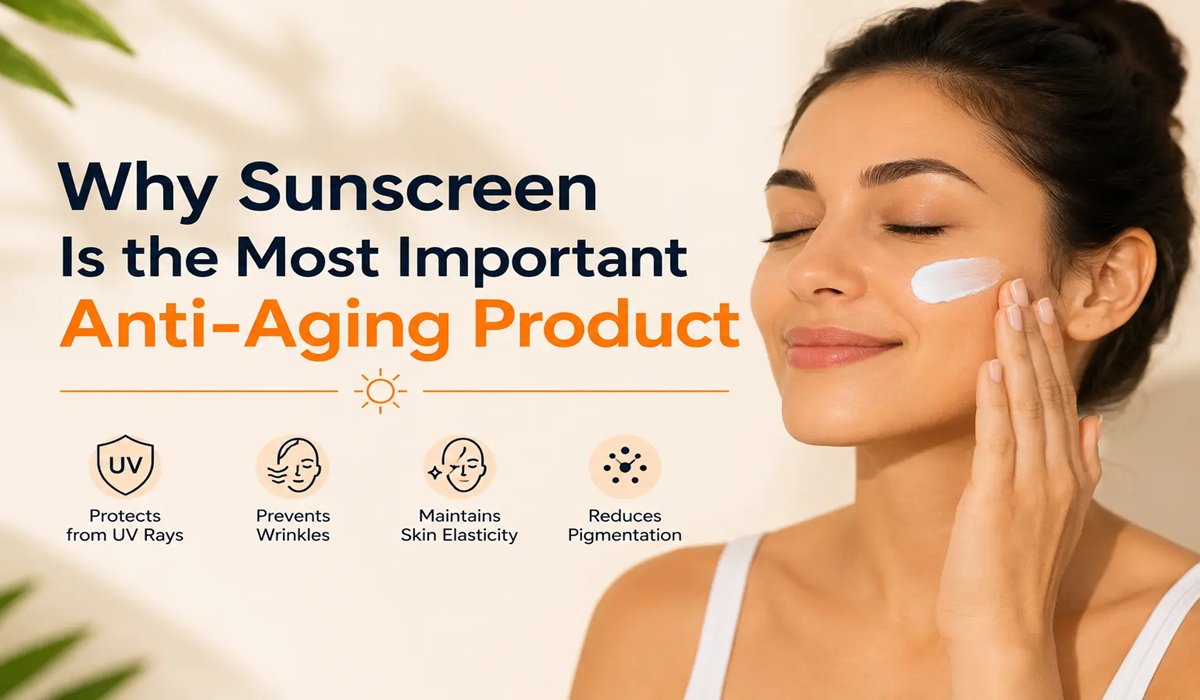
When we talk about anti-aging skincare, the conversation usually turns to retinol, vitamin C, peptides, collagen creams, and other active ingredients. These products can be useful, but there is one step that often matters more than all of them: daily sun protection.
Sunscreen doesn't work by making existing wrinkles disappear overnight. Its real value is prevention. By protecting the skin from ultraviolet (UV) radiation, sunscreen helps reduce the damage that can lead to premature wrinkles, pigmentation, uneven skin tone, and loss of firmness over time.
This is why sunscreen should be considered the foundation of an anti-aging skincare routine—not an optional product you use only when you're going to the beach.
How Does Sun Exposure Age Your Skin?
Your skin is exposed to sunlight almost every day. Even routine activities such as commuting, walking outdoors, sitting near a window, or driving can add to your overall UV exposure.
UVA rays can penetrate deeper into the skin and contribute to the breakdown of collagen and elastin. Over time, this can make the skin look less firm and contribute to fine lines and wrinkles. UV exposure can also trigger or worsen pigmentation and make existing dark spots more noticeable.
UVB rays are more closely associated with sunburn, but they also contribute to cumulative skin damage.
The visible result of long-term UV exposure is often called photoaging. Unlike the natural changes that happen with age, photoaging is strongly influenced by environmental exposure and can be reduced with consistent sun protection.
What Is Premature Skin Aging?
Premature skin aging means visible signs of aging that develop earlier than expected. Natural aging is unavoidable, but environmental factors can make these changes appear sooner or become more noticeable.
Common factors include:
- Repeated sun exposure
- Air pollution
- Smoking
- Poor skincare habits
- Chronic stress
- Inadequate sun protection
- Lack of sleep and an unhealthy lifestyle
Among these factors, sun exposure is one of the most important ones to address because it is something you can actively protect your skin against every day.
What Are the Early Signs of Sun-Induced Skin Aging?
Wrinkles aren't always the first sign that your skin is experiencing photoaging. You may notice smaller changes first.
Fine Lines
Fine lines may appear around the eyes, forehead, and mouth before deeper wrinkles become visible.
Uneven Skin Tone
Repeated UV exposure can contribute to dark spots, patchy pigmentation, and an uneven complexion.
Loss of Firmness
Damage to collagen and elastin over time can make the skin appear less firm or elastic.
Sunspots
Flat brown spots commonly develop on areas that receive frequent sun exposure, such as the face, hands, neck, and chest.
Dull or Rough Skin
Long-term environmental exposure can leave the skin looking dull and feeling less smooth.
These changes don't necessarily happen suddenly. They usually build up gradually, which is one reason daily prevention is so important.
Why Starting With Prevention Makes More Sense
A common approach to anti-aging skincare is to wait until wrinkles or pigmentation appear and then start looking for products to correct them.
That can mean investing in several serums, creams, facials, and treatments while overlooking the daily exposure that continues to contribute to the problem.
A better approach is to combine prevention with targeted skincare.
Sunscreen helps protect against further UV-related damage, while ingredients such as vitamin C, niacinamide, peptides, and other treatments can address specific skin concerns.
In simple terms:
Protect first. Treat second. Stay consistent.
How to Use Sunscreen Properly
Buying sunscreen is only half the job. The way you use it also matters.
Apply It Every Morning
Make sunscreen the final step of your morning skincare routine. Apply it after your moisturizer and give it enough time to settle before prolonged outdoor exposure.
Choose Broad-Spectrum Protection
Look for a broad-spectrum sunscreen that protects against both UVA and UVB radiation.
For everyday use, an SPF of 30 or higher is generally recommended.
Don't Use Too Little
Applying a very thin layer may not provide the protection indicated on the product label. For the face and neck, approximately two finger lengths is a commonly used practical guide.
Reapply When Necessary
If you're spending extended periods outdoors, sweating, swimming, or wiping your face frequently, sunscreen needs to be reapplied.
For prolonged outdoor exposure, reapplication every two hours is a useful general guideline.
Do You Need Sunscreen Every Day?
For most people, daily sunscreen is a sensible habit because UV exposure isn't limited to summer holidays or particularly sunny days.
Clouds don't completely block UV radiation, and people can still be exposed while commuting or spending time outdoors during their normal routine.
Indoor use is more situation-dependent. If you spend most of the day away from windows, your UV exposure will be lower. However, people who sit near windows or regularly drive may still benefit from daily sun protection.
The key point is consistency rather than waiting for a particularly sunny day.
Skincare Ingredients That Work Well Alongside Sunscreen
Sunscreen is the protective step in your routine. Other ingredients can be used to address individual concerns.
Vitamin C for Brightness and Antioxidant Support
Vitamin C is commonly used in morning skincare because of its antioxidant properties. It can help improve the appearance of uneven skin tone and support collagen production.
For people concerned about dullness, pigmentation, or early signs of aging, a vitamin C serum can complement daily sunscreen.
You can explore the Vitamin C Serum collection or options such as the iS Clinical Pro-Heal Serum Advance.
For pigmentation-focused skincare, Atomic Pharmacy also has a dedicated Pigmentation Care collection.
Niacinamide for Barrier Support
Niacinamide is a versatile ingredient that can be useful for oily, combination, and sensitive skin. It helps support the skin barrier and can improve the appearance of uneven tone and excess oil.
You can explore the Sebonia Niacinamide Zinc Serum or pair your serum routine with a barrier-supporting product such as Apifil Lotion Barrier Repair.
Peptides for Firmness
Peptides are commonly included in anti-aging skincare because they support processes associated with collagen production and skin repair.
They can be particularly useful for people concerned about fine lines and loss of firmness.
Explore the Brillare peptide-focused collection or browse Atomic Pharmacy's Ageing Care collection.
Hyaluronic Acid for Hydration
Hyaluronic acid helps attract and retain moisture, making it useful for skin that feels dry or dehydrated.
Well-hydrated skin often looks smoother and more comfortable, although hydration alone doesn't replace sun protection.
For a hydration-focused routine, consider Azelia I HA Hyaluronic Acid 3D Hydration Serum.
Featured Sunscreen: Brillare Professional Multi Protection Sunscreen
If you're looking for a sunscreen to include in a daily anti-aging routine, the Brillare Professional Multi Protection Sunscreen is one option available at Atomic Pharmacy.
Its place in an anti-aging routine is straightforward: sunscreen helps protect the skin from UV exposure, which is one of the major environmental contributors to premature skin aging.
The most important thing isn't simply choosing a particular brand. It's finding a sunscreen that suits your skin and that you can comfortably apply every morning and reapply when necessary.
A Simple Morning Anti-Aging Routine
You don't need a complicated routine to take good care of your skin.
Step 1: Cleanser
Start with a gentle cleanser that removes excess oil and impurities without leaving the skin feeling uncomfortably tight.
For an anti-aging-focused routine, you can explore options such as Brillare Professional Age Revival Face Wash.
Step 2: Antioxidant Serum
If vitamin C suits your skin, apply it after cleansing.
Options include Retix C Glow Booster Serum or Texlite Skin Brightening Face Serum.
Step 3: Moisturizer
Use a moisturizer based on your skin type. Hydration helps maintain a comfortable and healthy-looking skin barrier.
For an anti-aging routine, you can explore Brillare Professional Age Revival Moisturizer.
Step 4: Sunscreen
Finish your morning routine with broad-spectrum sunscreen.
This is the step you shouldn't skip if your goal is to prevent photoaging.
You can explore Brillare Professional Multi Protection Sunscreen.
A Simple Night Routine
Your night routine doesn't need to be complicated either.
Cleanse
Remove sunscreen, sweat, oil, and daily buildup from the skin.
Choose One Treatment Based on Your Concern
Depending on your skin and the advice of a skincare professional, you may use ingredients such as:
- Retinol for signs of aging
- Niacinamide for barrier support
- Tranexamic acid for pigmentation concerns
- Peptides for firmness
If pigmentation or aging is your main concern, you can browse Atomic Pharmacy's Ageing Care collection and Pigmentation Care collection.
Moisturize
Finish with a moisturizer to help maintain hydration and support the skin barrier overnight.
Choosing Products According to Your Skin Concern
Different skin concerns may need different approaches. Sunscreen, however, remains an important part of almost every routine.
For Acne Marks
UV exposure can make post-acne pigmentation more noticeable and may slow the improvement of dark marks.
A simple routine may include:
- Broad-spectrum sunscreen
- Vitamin C
- Niacinamide
- A suitable moisturizer
For Melasma
Melasma is strongly influenced by UV exposure, so consistent sun protection is particularly important.
Depending on individual needs, a routine may include:
- Broad-spectrum sunscreen
- Tranexamic acid
- Brightening products
- A suitable moisturizer
Persistent or worsening melasma should be assessed by a dermatologist.
For Sun-Induced Pigmentation
If your concern is sunspots or an uneven complexion, focus first on preventing additional UV exposure.
Antioxidants and pigmentation-focused ingredients can then be incorporated according to your skin's tolerance.
For Sensitive Skin
Sensitive skin doesn't need an aggressive routine. Focus on gentle cleansing, barrier support, and a sunscreen that feels comfortable enough to use consistently.
Be Careful When Combining Active Ingredients
More skincare products don't necessarily mean better results.
Using several strong active ingredients together can increase the chance of dryness, redness, or irritation.
For example, introducing retinol alongside several exfoliating acids at the same time may be too much for some skin types. Similarly, combining multiple treatment products without understanding how they interact can make it difficult to identify the cause of irritation.
A safer approach is to introduce one active product at a time and allow your skin to adjust.
If you're already using prescription treatments or have sensitive skin, speak with a dermatologist before adding multiple active ingredients.
Everyday Habits That Support Healthy Skin
Your skincare routine is only one part of the picture.
Simple lifestyle habits can also support healthier-looking skin:
- Wear sunscreen consistently.
- Reapply during prolonged outdoor exposure.
- Spend less time in direct sunlight when UV levels are high.
- Wear protective clothing or use shade when appropriate.
- Avoid smoking.
- Get adequate sleep.
- Eat a balanced diet with plenty of fruits and vegetables.
- Keep your skincare routine consistent.
You don't have to make your routine complicated. Small habits repeated every day usually make more sense than occasionally using a large number of products.
When Should You See a Dermatologist?
Skincare products can help with many common concerns, but some problems need professional assessment.
Consider seeing a dermatologist if:
- Pigmentation keeps getting worse.
- You develop persistent or unusual skin changes.
- Your skin becomes repeatedly irritated by skincare products.
- Over-the-counter products aren't helping.
- Fine lines or pigmentation are appearing earlier than expected.
- You aren't sure which active ingredients are suitable for your skin.
- You want a personalized anti-aging treatment plan.
A dermatologist can assess your skin and recommend products or treatments according to your specific concerns.
Frequently Asked Questions
Is sunscreen really the most important anti-aging product?
Sunscreen is one of the most important anti-aging products because it helps prevent UV-related skin damage. Other ingredients, such as retinoids, antioxidants, peptides, and niacinamide, can address specific concerns, but they don't replace sun protection.
At what age should I start using sunscreen?
Daily sun protection is a good habit to establish early and continue throughout adulthood. The exact product and formulation can vary depending on age, skin type, and individual needs.
Does sunscreen prevent wrinkles?
Regular sunscreen use can help reduce UV-related collagen damage and therefore lower the risk of premature wrinkles caused by photoaging.
Can sunscreen help with pigmentation?
Yes. Sunscreen helps prevent UV exposure from worsening pigmentation and can make it easier for pigmentation-focused treatments to work as part of a complete routine.
Do I need sunscreen indoors?
It depends on your environment. If you spend significant time near windows or drive frequently, UVA exposure through glass can be relevant. If you spend the entire day away from direct sunlight and windows, your exposure is much lower.
How much sunscreen should I use?
A practical guide for the face and neck is approximately two finger lengths of sunscreen. The important thing is to apply enough product to achieve the protection stated on the label.
What SPF should I use every day?
SPF 30 or higher is generally recommended for daily use. If you're spending considerable time outdoors, additional protective measures and appropriate reapplication become especially important.
Can sunscreen replace moisturizer?
Some sunscreens contain moisturizing ingredients, but whether you need a separate moisturizer depends on your skin type and the sunscreen formula you're using.
Recommended Anti-Aging Skincare at Atomic Pharmacy
If you're building an anti-aging skincare routine, you don't need to purchase everything at once. Start with the basics and add targeted products according to your skin's needs.
|
Skin Concern |
Useful Ingredient |
Product/Collection |
|
Premature aging |
Broad-spectrum SPF |
|
|
Fine lines |
Peptides |
|
|
Pigmentation |
Vitamin C |
|
|
Melasma concerns |
Tranexamic Acid |
|
|
Dull skin |
Vitamin C |
|
|
Uneven skin tone |
Niacinamide |
|
|
Dry/dehydrated skin |
Hyaluronic Acid |
|
|
Aging concerns |
Targeted anti-aging products |
Final Thoughts
Anti-aging skincare doesn't have to mean using a shelf full of expensive products.
The most important place to start is protecting your skin from the damage that contributes to premature aging. Daily sunscreen helps reduce the impact of UV exposure, while ingredients such as vitamin C, niacinamide, peptides, and hyaluronic acid can be added according to your skin's individual needs.
The goal isn't to build the longest skincare routine. It's to build one that makes sense for your skin and that you can follow consistently.
Protect your skin every morning, choose active ingredients carefully, and give your routine enough time to work.
That's a much more practical approach to keeping your skin looking healthy, even-toned, and youthful over the long term.